Champagne, or crémant? How do we differentiate these two types of wine that we often drink during a meal or a celebration? These bubbles, which add sparkle to all gatherings with friends and are often difficult to distinguish, each have their own history, particularly depending on where they were produced. In this article, Fauchon gives you all the details to distinguish these ultimate symbols of celebration.
The particularities of champagne: a French wine associated with an emblematic region
During celebratory moments (birthdays, end-of-year festivities, etc.), it is always pleasant to enjoy a bottle of champagne with friends or family. Indeed, champagne has a strong symbolism associated with celebration and joy, as well as unparalleled flavours. If champagne has such a unique connotation, it is because it is unique, both in its appellation and in its production process.
Indeed, the Champagne appellation is highly protected, meaning that only wines from the Champagne region can be called as such. The regulations are very strict in this regard, and no wine outside the region can be named champagne. Because more than just a name, champagne represents grape varieties, an elaborate production method, and meticulous aging time.
Furthermore, champagne also differentiates itself from crémants by being based on a blend of three precise grape varieties:
- Pinot Meunier;
- Pinot Noir;
- Chardonnay.
A grape variety is a specific type of vine that produces a unique grape. These three grape varieties give champagne its unique taste, which is produced using the very complex Champenoise method. This traditional practice creates the wine's effervescence: yeasts and sugars are added during the second fermentation in the bottle. This is why the production of authentic champagne takes several years, which further distinguishes it from other wines. The elaboration of sparkling wines is also inspired by the champagne model, particularly in the blending of several grape varieties.
Fauchon's champagne selection: which products to taste?
During a gathering with friends, for a festive occasion or not, a champagne tasting will always be welcome. It is with this in mind that Fauchon, always committed to offering you products of excellence, offers a selection of champagnes for all your occasions:
- FAUCHON Brut Champagne. Our essential. This floral white champagne offers a beautiful minerality and an elegant tasting experience.
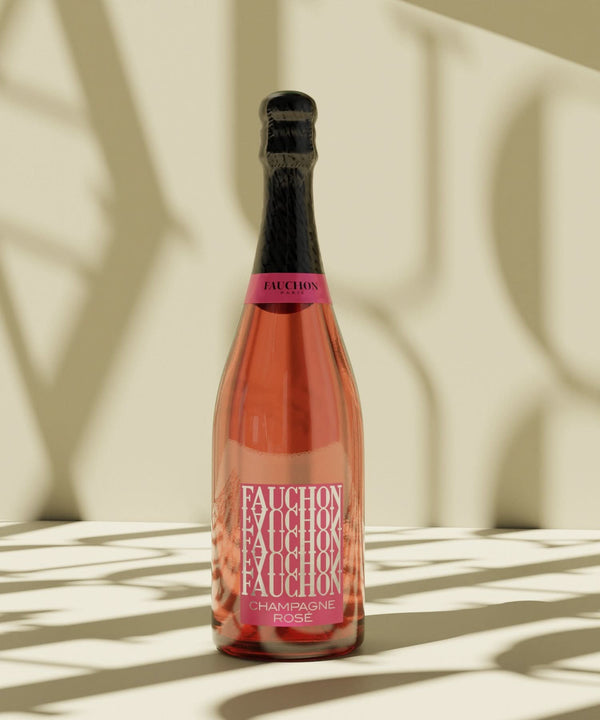
- FAUCHON Rosé Champagne. Its unique aromas of sweet spices and wild berries will perfectly complement your palate.
- Ruinart Brut Champagne. Enhance your tasting moments with this wine from the world's first Champagne house.
- Dom Pérignon Vintage Champagne. Made with the best grapes, this champagne, a symbol of excellence, will make your gatherings with loved ones even more precious.
- Fauchon Blanc de Blancs Brut Champagne. This champagne will add aromatic complexity to your tastings.
- Copinet Blanc de Blancs Champagne. The tasty and Terra Vitis certified Copinet Blanc de Blancs will be the perfect champagne if you appreciate eco-friendly viticulture.
The particularities of crémant: a sparkling wine adopting the codes of champagne
Originally, the term crémant was used to refer to a champagne whose bottle pressure was half that of regular champagne, making it a creamier wine with a lighter foam. Today, and since 1975, crémant is under Appellation d'Origine Contrôlée (AOC); the term "sparkling wines" is also used to refer to other sparkling wines in general.
Crémant is now made using the traditional method, i.e., the Champenoise method: its pressure is therefore equivalent to that of champagne. However, the term "Champenoise method" is reserved for wines produced in Champagne, which is why we speak of the "traditional method" for crémants. Furthermore, the monitoring of crémant production remains less qualitative than that of champagne, which makes all the difference: in terms of price, a bottle of crémant will therefore be more affordable than a bottle of champagne.
The price of champagne is indeed higher than that of crémant, and this is explained by the renown of the Champagne region, higher production costs, and abundant international demand.
Moreover, crémant is not produced in Champagne, but in 8 other wine-growing regions, each bringing its own signature according to the grape varieties of its terroir:
- Bordeaux with Cabernet Sauvignon as the dominant grape variety;
- Burgundy with dominant grape varieties such as Gamay, Chardonnay, Pinot Gris, Pinot Noir;
- The Jura with Poulsard, Pinot Noir, or Savagnin;
- Alsace with Riesling;
- Limoux with Chardonnay and Chenin;
- The Loire with Chenin used in the blend;
- Die with Clairette;
- And the Grand Duchy of Luxembourg (since January 4, 1991) with Riesling and Auxerrois.
Crémant internationally
France, recognized worldwide for its champagnes and crémants, is not the only country to create them. Several countries produce sparkling wines that generally have their own appellation. Spain, for example, produces Cava, and Italy produces Prosecco and Asti Spumante.
How to serve and taste crémant or champagne?
For the most subtle tasting, Crémant and Champagne should be served well chilled. They are ideally served at a temperature between 6 and 8 degrees Celsius. To preserve the bubbles and aromas, use Champagne flutes. During tasting, observe the colour, smell the aromas, then take small sips to appreciate the delicate flavours.
At Fauchon, you can also find quality crémant such as Thierry Germain Bulles de Roches, aged on laths in the cool cellars of his estate, carved into the tuffeau subsoil. Its beautiful minerality and fine, lemony bubbles will delight your tasting moments.